How VAT works across the EU for businesses
EU businesses charge home VAT less purchase VAT, apply zero VAT or reverse charge to B2B, and charge consumer-country VAT after €10,000 or through OSS.
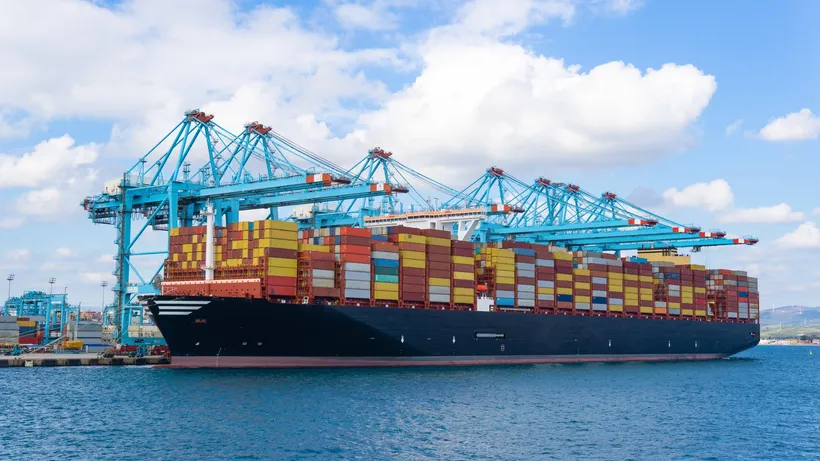
Photo: Canva
EU VAT is a consumption tax, and the result depends on the country, the customer and the type of sale. Businesses normally charge domestic VAT at home, use reverse charge rules for many cross-border business sales, and charge VAT in the customer’s country for many consumer sales.
The VAT Directive (Directive 2006/112/EC) sets common EU rules, while each member state applies its own VAT rates and administration. The European Commission says the standard rate cannot be lower than 15 per cent.
| Situation | VAT treatment |
|---|---|
| Domestic sale | Charge VAT under the rules of the country where the business is established. |
| B2B goods supply across EU countries | The supplier does not add VAT if the business buyer holds a valid EU VAT number. |
| Cross-border B2B services | The customer usually accounts for VAT through reverse charge. |
| EU consumer distance sale | VAT is normally due where transport ends, subject to the €10,000 threshold rules. |
| OSS | One registration, return and payment for qualifying EU consumer sales. |
| IOSS | For imported goods in consignments up to €150. |
| SME scheme | Optional VAT exemption route for qualifying EU small businesses. |
| Imported low-value goods | €3 temporary customs duty per tariff-classified item from 1 July 2026. |
VAT on sales inside one country
A business operating inside one member state normally registers there and charges VAT to its customers. It can usually deduct VAT paid on purchases used for its business, then reports both figures in its periodic VAT return.
The amount paid to the tax authority is VAT charged on sales minus VAT paid on business purchases. If the result is negative, the authority reimburses or credits the difference.
For example, a business charges €2,000 VAT on sales and has paid €700 VAT on qualifying purchases. Its VAT due is €2,000 minus €700, which equals €1,300.
Businesses selling locally should use the applicable national rate and can review VAT rates in EU member states.
Cross-border sales between businesses
When goods move from one EU country to a business customer in another, the supplier can invoice without VAT if that buyer holds a valid EU VAT number. The seller can still usually deduct VAT on costs linked to making that sale.
Where the business customer cannot provide a valid EU VAT number, the supplier will usually apply the VAT rate of its own country. A business buying goods from another member state declares VAT at its own country’s rate as though it had made the sale itself.
A service supplied across EU borders to another business will usually use reverse charge. The seller invoices without VAT, while the customer declares and pays VAT at its domestic rate.
For example, a business buys a €1,000 cross-border service and its domestic VAT rate is 20 per cent. It declares €1,000 multiplied by 0.20, or €200, and can usually deduct that €200 later in a VAT declaration.
Businesses can use how to check an EU VAT number before treating a cross-border goods supply as VAT-free. These B2B rules have important exceptions.
Consumer sales, the €10,000 threshold and OSS
For distance sales of goods within the EU, VAT is generally due in the member state where transport ends. One annual €10,000 threshold applies to cross-border consumer sales of TBE (telecommunications, broadcasting and electronic) services and EU distance sales of goods.
For each of the current calendar year and the preceding calendar year, the total covered supplies, excluding VAT, must not exceed €10,000. The limit applies separately to each year, rather than to the two years added together.
The threshold applies only where the seller is established, permanently resident or usually resident in one member state. For goods, transport must begin in the seller’s member state and finish in a different member state.
Below the threshold, the seller uses its own member state’s VAT rules. It may elect to use customer-country rules instead, but that choice binds it for two calendar years.
Once supplies exceed €10,000, customer-country VAT applies without exception. Other services and imported-goods distance sales sit outside this threshold.
The One Stop Shop (OSS) lets a seller make one registration, submit one return and make one payment for qualifying EU consumer sales. VAT is charged at the customer’s country rate.
Use of OSS is voluntary. A business that does not use it would otherwise register in each member state where it sells to consumers. An OSS return sits alongside the normal domestic VAT return rather than replacing it.
The Union scheme and Non-Union scheme use calendar quarters. The Import scheme (IOSS), the Import One Stop Shop, uses calendar months. The return and payment must arrive by the last day of the month after the relevant period, even if that date is a weekend or public holiday.
For example, Q3 ends on 30 September. Its OSS return and payment are due on 31 October, even where that date falls on a Saturday.
IOSS and the €3 temporary customs duty
IOSS covers distance sales of imported goods where each consignment does not exceed €150. VAT is taken at the point of customer payment under IOSS, rather than being collected when the goods arrive.
The removal of the former VAT exemption for consignments up to €22 means imported goods entering the EU now carry VAT. A seller established outside the EU generally needs an EU-established intermediary to use IOSS, unless it is established in a non-EU country with a VAT mutual-assistance agreement and sends the goods from that country.
The €3 temporary customs duty began on 1 July 2026 for imported consignments valued at no more than €150. The duty continues until 1 July 2028, after which normal customs duties apply by type of good.
The duty is €3 per item counted by tariff classification, not per parcel or physical quantity. Five T-shirts count as one item and incur €3, while one T-shirt and one watch count as two items and incur €6.
The seller or importer acting as declarant pays the duty. It applies whether the sale uses IOSS, special arrangements or standard VAT, although some preferential trade agreement goods or Customs Union measure goods can be excluded where IOSS did not collect the VAT.
The SME scheme
The SME scheme began on 1 January 2025. It allows qualifying small businesses established in one member state to use VAT exemption in other member states where the scheme has been placed into national law.
Union-wide turnover must not exceed €100,000 in either the current or preceding calendar year. Turnover must also stay within each participating country’s national threshold, which cannot exceed €85,000.
The business registers once in its Member State of establishment (MSEST) and receives one EX number. It files one quarterly turnover report across member states instead of periodic VAT returns.
The exemption is optional, but it removes the right to deduct VAT on purchases used for exempt supplies. Businesses from the UK, including Northern Ireland, are treated as non-EU businesses for this scheme and cannot use it.
ViDA timetable
VAT in the Digital Age (ViDA) was adopted on 11 March 2025 and entered into force on 14 April 2025. Member states can introduce mandatory e-invoicing from that point where specified conditions apply.
From 1 January 2027, OSS extends to B2C supplies in the e-charging sector. From 1 July 2028, Single VAT Registration (SVR) changes start, including a mandatory reverse charge.
Platform rules for short-term accommodation and passenger transport begin on 1 July 2028. Member states can postpone them until 1 January 2030, and a deemed supplier platform collects and pays VAT where its suppliers do not.
Digital Reporting Requirements (DRR) for cross-border B2B transactions begin on 1 July 2030 and use mandatory e-invoicing. By 1 January 2035, member states with domestic real-time reporting systems must bring them into line with the EU system.
Common questions
Does OSS replace a domestic VAT return?
No. OSS returns are separate from the business’s normal domestic VAT return.
Can a seller use OSS for domestic consumer sales?
No. Consumer sales made inside the seller’s own country remain on the domestic VAT return. OSS is optional for qualifying consumer sales across member states.
What happens after the €10,000 threshold is exceeded?
The seller must apply VAT rules in the customer’s country for the covered supplies. The customer-country rule applies without exception once the threshold is exceeded.
Can an SME deduct VAT on purchases used for exempt supplies?
No.
Sources
- Your Europe: VAT rules and rates: standard, special & reduced rates
- European Commission: VAT Directive - Taxation and Customs Union
- Your Europe: Charging and deducting VAT & invoicing rules
- Your Europe: Cross-border VAT rates in Europe
- European Commission: The One Stop Shop - VAT e-Commerce - One Stop Shop
- European Commission: VAT One Stop Shop - VAT e-Commerce - One Stop Shop
- Your Europe: EU VAT One Stop Shop (OSS)
- European Commission: Declare and pay in OSS - VAT e-Commerce - One Stop Shop
- European Commission: Register to OSS - VAT e-Commerce - One Stop Shop
- European Commission: Guidance and legal text on temporary flat fee on low-value imports which will apply until 1 July 2028
- European Commission: VAT rules for small enterprises - SME scheme - VAT rules for small enterprises - SME scheme
- European Commission: VAT in the Digital Age (ViDA)
- European Commission: VAT in the Digital Age: 2026 Work Programme available