Huawei Unveils Grid Interactive AIDC Solution
Huawei grid-interactive AIDC solution combines power, cooling and digital operations to maximise tokens per watt for AI data centres.
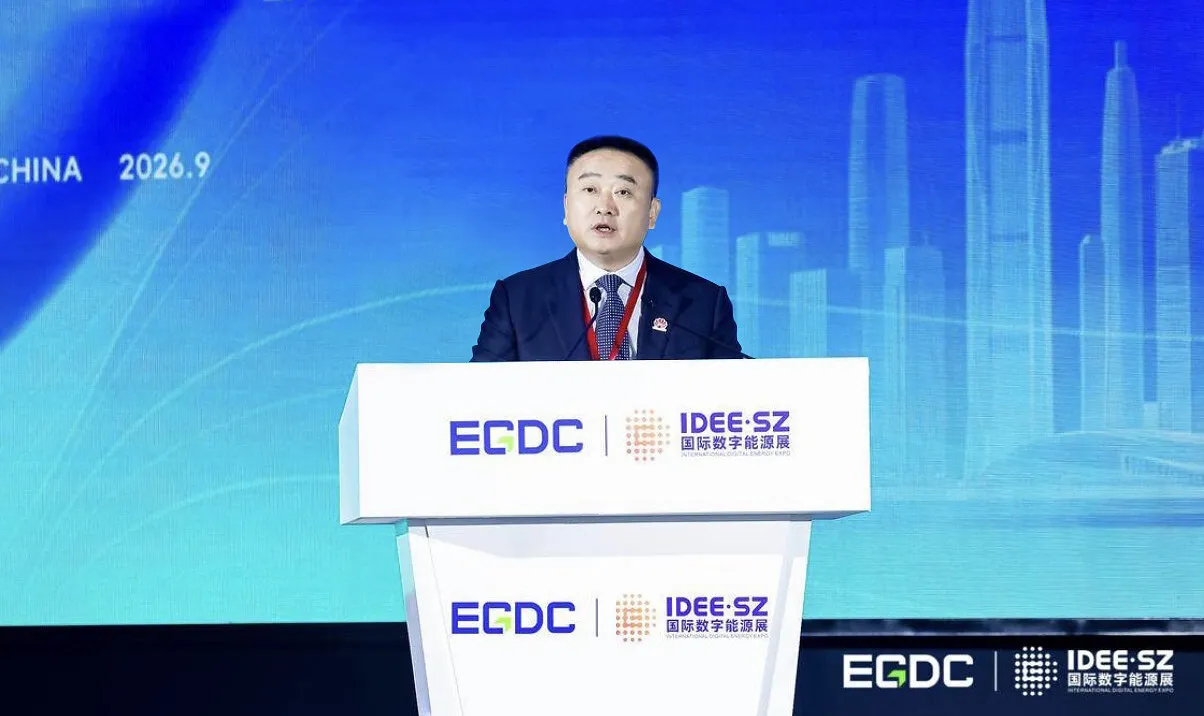
Huawei has unveiled a grid-interactive AI data centre solution at the Green Energy Development Conference & International Digital Energy Expo 2026 in Shenzhen. Presented by Zhou Jianjun, Vice President of Huawei and President of Global Marketing, Sales and Services at Huawei Digital Power, the system is designed to address power acquisition, high-density supply and cooling, and operational requirements for AI data centre campuses. The company’s approach combines compute and electricity systems to maximise tokens per watt. Huawei has structured the offer around power, digital and thermal systems, alongside a productised construction model.
Compute And Power Converge
Huawei positions the solution for an AI infrastructure market where token consumption is rising alongside investment in large-scale computing capacity. It says AI data centre campuses are expanding from megawatt-scale facilities towards hundreds of megawatts and gigawatts, placing new demands on power supply, cooling, delivery and maintenance.
The company’s proposition reflects the relationship between computing loads and grid operations, particularly as renewable energy penetration increases and local grid conditions become more variable.
Zhou Jianjun, Vice President of Huawei and President of Global Marketing, Sales and Services, Huawei Digital Power, stated:
“Electricity is essential for computing. Today, in the AI era, the startup, shutdown, and load fluctuations of a large AIDC campus can all impact grid operations.”
A Three Plus One Framework
Huawei’s “3+1” framework covers Watt, Bit and Heat, as well as the construction model. In the electricity domain, the company aims to move AIDC facilities beyond stable power consumption towards supporting the grid, using grid-forming control and energy storage synergy to handle weak grids and large load fluctuations.
Its portfolio includes the FusionSolar 1000 V grid-forming inverter series and the LUTERRA 1000 V Smart String Grid Forming ESS Platform. On the load side, Huawei is developing an integrated grid-forming energy router based on solid-state transformer technology. The company also says it has passed a wideband oscillation damping test conducted by the Shanghai Electrical Apparatus Research Institute.
Cooling And Digital Operations
For thermal management, Huawei is focusing on system-wide reliability, from chips through to cooling sources. Its Thermal Management Unit and AI-enabled MW-level liquid cooling system are intended to provide controllable cooling for high-density AIDC environments.
In the digital domain, the solution uses AI capabilities to shift operations and maintenance from passive processes to proactive sensing, optimisation and protection. Huawei’s construction model uses productisation, prefabrication and modularisation, shifting complexity to the factory and seeking to accelerate compute capacity rollout.
Supporting Efficient AI Capacity
Huawei describes the grid-interactive AIDC solution as an end-to-end system designed to support reliable operation, energy efficiency, rapid delivery and grid-friendly performance for large computing loads.
Zhou Jianjun, Vice President of Huawei and President of Global Marketing, Sales and Services, Huawei Digital Power, said:
“AI is opening up a new era of industry. In response to the opportunities brought by the AIDC industry transformation, Huawei deeply integrates digital technology, power electronics, thermal management, and energy storage management, and focuses on the new power system and core fields of AIDC to build comprehensive capabilities in renewable energy generation, grid forming and grid connection, power supply for high-density compute, liquid cooling, and compute-electricity synergy. Huawei is willing to work with global customers and partners to drive the AIDC industry toward high-quality, sustainable, and innovative development, enabling each watt to produce more tokens and powering the AI era forward.”