How to Become a Chief Operating Officer: Paths, Pay, Steps
How to become a chief operating officer: the usual routes, years of experience, MBA odds, pay, and the jobs ten new COOs held just before.

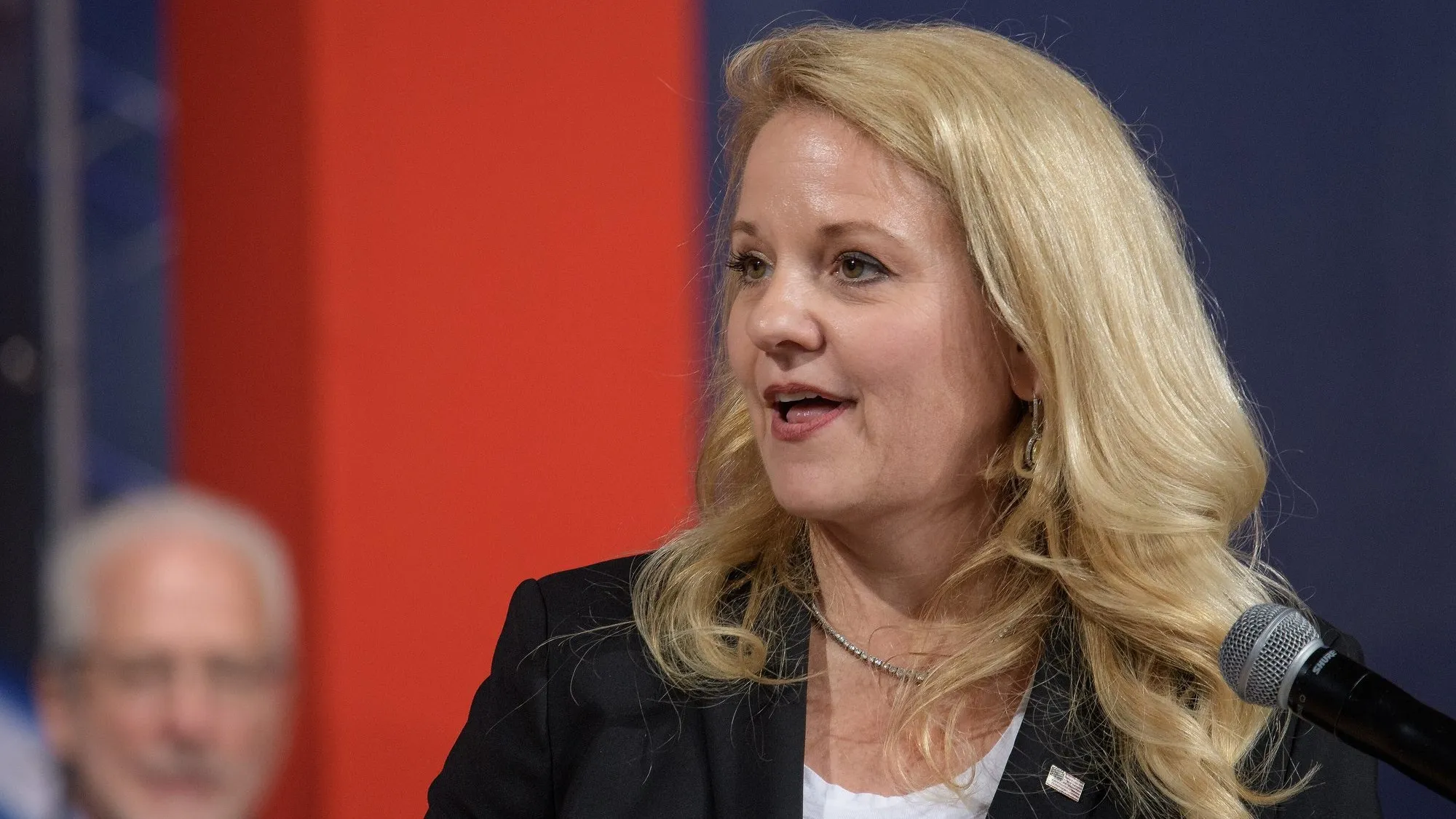
Carolina Dybeck Happe, the former GE finance chief who joined Microsoft as executive vice president and chief operations officer in 2024. Photo: Landersonbrooke, CC BY-SA 4.0, via Wikimedia Commons.
To become a chief operating officer, you usually spend a decade or more running a large part of a business (operations, finance, a region or a whole business unit) and then step up, often inside the company you already work for. You need a degree, an MBA helps but most COOs do not have one, and the job is often a waiting room for the top seat: in 2025, 43.9% of the CEOs of America's biggest companies had come straight from a COO or president role.
The COO job in numbers
| Question | Answer | Year |
|---|---|---|
| Average time to a first C-suite job (Fortune 500 COOs) | 10.5 years | 2023 |
| Fortune 500 COOs with an MBA | 27.4% | 2023 |
| Fortune 500 COOs with a master's or doctorate | 67% | 2023 |
| US median wage, chief executives (COOs are counted here) | $213,990 | May 2025 |
| COO pay as a share of CEO pay | 42% (Russell 3000), 38% (S&P 500) | 2024 |
| Median time in the COO job | 2 years | 2024 |
| COOs leaving in 2024 who were promoted to CEO at the same company | 26.6% | 2024 |
| Sitting big-company CEOs who came straight from a COO or president job | 43.9% | 2025 |
The usual routes into the job
There is no single ladder, but recent appointments fall into four groups.
Operations
The most direct road is running what a company makes or delivers. Sabih Khan, 30 years at Apple, was senior vice president of operations and had run its global supply chain for six years when Apple named him COO in July 2025. Don Garrison ran global operations for the semiconductor unit at Littelfuse before Lawrence Semiconductor hired him as COO in September 2026.
Finance
A finance chief already sees every part of the business through its numbers. Target made its chief financial officer, Michael Fiddelke, COO in January 2024. Carolina Dybeck Happe was finance chief at GE until 2023 and joined Microsoft in September 2024 as executive vice president and chief operations officer, a newly created post.
Consulting
Consultants who have led large change programmes for clients can move straight into the job. Radhika Ray was a partner in the transformation practice at McKinsey & Company when CFGI, a firm owned by Carlyle and CVC, named her COO in March 2026.
A business unit, a region or sales
The Conference Board, in its 2024 study of CEO succession, says a COO often steps up from a business unit head role. That usually means you have owned a profit and loss account (P&L): revenue, costs and the profit left over. Stephanie Pope ran Boeing Global Services before becoming Boeing's COO in January 2024. Henrique Braun ran Coca-Cola's International Development arm, seven of its nine operating units, before taking the COO job in January 2025. On the commercial side, Mayur Kapse spent more than 18 years across sales, marketing, consumer insights, operations and customer service before AARAV made him COO of its fragrances business.
How much experience you need
A 2023 study of Fortune 500 executives' career histories, by researchers at the University of Georgia, Brigham Young University and Arizona State University, found that COOs took 10.5 years on average to reach their first C-suite job and 22.2 years to reach one at a Fortune 500 company. Before that, they had worked at 4.3 companies on average and stayed about 8 years at each.
Promotion from inside takes patience as well. The 2021 Crist|Kolder Associates Volatility Report found that COOs promoted internally had spent between 9.9 and 14.2 years at their company first, depending on the industry.
The size of what you have run counts as much as the years. When Lawrence Semiconductor hired Garrison, it pointed to his role directing manufacturing, engineering and supply chain across eight sites and more than 2,500 people. Patriot Rail picked Jason Bradt for nearly 30 years of railroad experience at Genesee & Wyoming and CSX.
Do you need an MBA?
No, though a postgraduate degree is common. In the same 2023 study, 27.4% of Fortune 500 COOs held an MBA, more than chief executives (20.8%) but fewer than finance chiefs (34.5%). Counting all postgraduate degrees, 57% of COOs held a master's and 10% a doctorate or law degree, so about a third stopped at a bachelor's degree. The researchers estimated that an MBA cut the time to a first C-suite job by about 13 months.
The US Bureau of Labor Statistics (BLS) says top executives typically need a bachelor's or master's degree in a field such as business or engineering, and that those at large corporations may have an MBA.
What chief operating officers earn
BLS does not publish a separate pay figure for COOs. It treats them as one type of chief executive, and the median annual wage for chief executives was $213,990 in May 2025. The lowest 10% earned less than $75,700 and the highest 10% more than $507,730. Those are wages; BLS notes that total pay for corporate executives often adds stock options and bonuses.
For listed companies, The Conference Board found that in 2024 COOs earned about 42% of what CEOs earned in the Russell 3000 and 38% in the S&P 500, a larger share than chief legal, HR or marketing officers. Median CEO pay for fiscal 2024 was $6.7 million in the Russell 3000 and $16.5 million in the S&P 500.
How long COOs stay, and how many become CEO
The Conference Board's 2024 study put the median COO tenure at two years and found that 57% of companies scrapped the COO role entirely after promoting a new chief executive. It calls the COO role the most common path to the top.
The Crist|Kolder 2024 Volatility Report counted 81 COO departures at Fortune 500 and S&P 500 companies that year: 26.6% were promoted to CEO inside the company and another 3.8% became CEO elsewhere. Its 2025 report found 41.37% of sitting CEOs had been promoted internally straight from a COO or president job, and 2.53% hired from outside from one.
Two people in the table below have already made that move. Fiddelke became Target's CEO on 1 February 2026, and Coca-Cola elected Braun CEO with effect from 31 March 2026.
Not every company has a COO. Crist|Kolder counted 256 sitting COOs across 664 companies in 2025: 38.1% of those companies had one, against an average of 35.5% over the past decade. What the job involves day to day is set out in what a chief operating officer does, and how it differs from the president's job is covered in chief operating officer vs president.
Recent COO appointments and the job each person held before
| COO | Company | Appointed | Job just before | Route |
|---|---|---|---|---|
| Stephanie Pope | Boeing | Jan 2024 | President and CEO, Boeing Global Services | Business unit |
| Michael Fiddelke | Target | Jan 2024 | Chief financial officer, Target (CEO from Feb 2026) | Finance |
| Carolina Dybeck Happe | Microsoft | Sep 2024 | Chief financial officer, GE, to 2023 | Finance |
| Henrique Braun | Coca-Cola | Jan 2025 | President, International Development (CEO from Mar 2026) | Region |
| Andrew Macdonald | Uber | Jun 2025 | Senior vice president, Mobility and Business Operations | Business unit |
| Sabih Khan | Apple | Jul 2025 | Senior vice president, Operations | Operations |
| Radhika Ray | CFGI | Mar 2026 | Partner, McKinsey & Company | Consulting |
| Mayur Kapse | AARAV Fragrances & Flavors | Sep 2026 | More than 18 years across sales, marketing, consumer insights and operations | Sales |
| Jason Bradt | Patriot Rail | Sep 2026 | Railroad leadership roles at Genesee & Wyoming and CSX | Operations |
| Don Garrison | Lawrence Semiconductor | Sep 2026 | Vice president, global operations, Littelfuse semiconductor unit | Operations |
Five of the ten were promoted inside their own company. Six came from operations, a business unit or a region, two from finance, one from consulting and one from a commercial career.
How to become a chief operating officer, step by step
- Get a degree. Business and engineering are the usual fields, though your industry may favour another.
- Lead people early: a team first, then a department with its own budget.
- Run something with its own P&L, such as a plant, a region, a product line or a business unit. The Conference Board's 2024 study found COOs often step up from running a business unit.
- Work outside your own function. If you came up through finance, spend time in operations; if you came up through operations, take a commercial job.
- Fill gaps in your training. An MBA or executive programme helps if you have no business schooling; the 2023 study put the time saved at about 13 months.
- Be ready to change employer. In the same study, 87% of Fortune 500 executives had worked at other companies before reaching the C-suite.
- Earn the chief executive's trust. The COO carries out the CEO's plan, so the working relationship matters as much as the CV.
- Plan the next move. With a median tenure of two years, find out early whether the board sees you as a future CEO.
Sources
- US Bureau of Labor Statistics: Occupational Outlook Handbook, Top Executives
- The Conference Board: CEO Succession Practices in the Russell 3000 and S&P 500, 2024 Edition
- Harvard Law School Forum on Corporate Governance: Pay Ratios, CEO and C-Suite Compensation in the Russell 3000 and S&P 500
- Harvard Law School Forum on Corporate Governance: CEO and Executive Compensation Practices in the Russell 3000 and S&P 500
- Crist|Kolder Associates: Volatility Report 2025
- Crist|Kolder Associates: Volatility Report 2024
- Crist|Kolder Associates: Volatility Report 2021
- ACM SIGMIS-CPR 2023: Charting a Course to the Top, Insights from the Fortune 500 CIOs and How They Differ from Other C-Suite Executives
- Boeing: Boeing Names Stephanie Pope Chief Operating Officer
- Target: Michael Fiddelke to become chief operating officer
- Target: Target Appoints Michael Fiddelke As Chief Executive Officer
- Microsoft: Microsoft names new Executive Vice President and Chief Operations Officer
- GE: GE Announces Chief Financial Officer Transition
- The Coca-Cola Company: CEO succession plan, Henrique Braun to succeed James Quincey
- US SEC: Uber Technologies Form 8-K, 2 June 2025
- Apple: Apple announces chief operating officer transition
- CFGI: CFGI Appoints Radhika Ray as Chief Operating Officer