What Does a Chief Operating Officer Do? The COO Explained
What does a chief operating officer do? The daily job, the seven types of COO, how many big companies had one in 2025, and what real COOs ran.
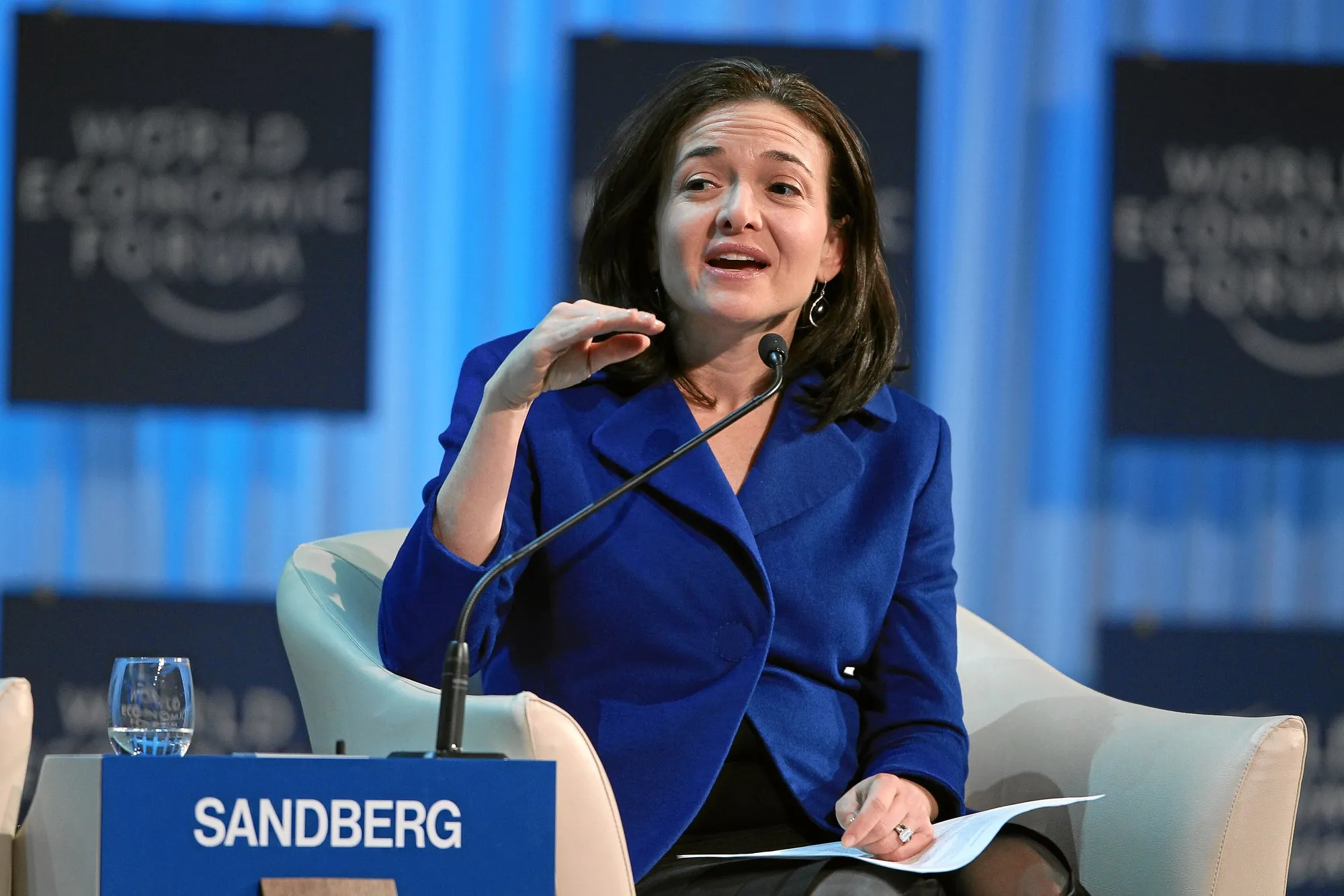
Sheryl Sandberg, then chief operating officer of Facebook, speaking at the World Economic Forum Annual Meeting in Davos, Switzerland, in January 2012. Photo: World Economic Forum, CC BY-SA 2.0, via Wikimedia Commons.
A chief operating officer (COO) runs the daily work of a company: making the product or delivering the service, the supply chain, quality and cost. That frees the chief executive to set direction and deal with investors, customers and the board. The COO usually reports to the CEO, and the job is shaped around what that CEO needs, so two COOs can do very different work.
COO responsibilities at a glance
| Area | What the COO does | A real example |
|---|---|---|
| Daily operations | Keeps production, delivery and service running | Gwynne Shotwell, SpaceX: day-to-day operations and customer relations |
| Supply chain | Planning, buying, manufacturing, logistics, delivery to customers | Sabih Khan, Apple (COO since 2025): global supply chain |
| Sales and service | In some companies, the sales teams and customer support too | Tim Cook, Apple COO 2005 to 2011: worldwide sales, service and support |
| Internal functions | Often HR, communications and policy, mostly in younger firms | Sheryl Sandberg, Facebook, 2008: sales, marketing, HR, policy, communications |
| Quality and capacity | Engineering, quality control, new capacity | Don Garrison, Lawrence Semiconductor, 2026: manufacturing, engineering, quality |
| Big change | Turnarounds, rapid growth, reorganisations | Ray Lane, Oracle, 1990s: rebuilt sales and marketing |
| Results | Cost, on-time delivery, return on investment, profit | Apple's 2025 COO bonus: net sales and operating income |
What a COO does day to day
The work follows the business. In a manufacturer the COO runs the plants and logistics; in a retailer, the stores and distribution centres. Most weeks include reading production or service figures to check that orders go out on time and at the planned cost, writing operating plans, leading projects that add capacity, and setting quality and safety rules.
The scope also changes by industry. In mining or transport the COO usually owns the core operation. In banks and holding companies the job is more often the support functions, such as HR and back-office processing. In other companies the COO looks after whole business units, much like a president; how the two titles split the work is covered in COO vs president.
The best COOs do not run everything themselves. COOs interviewed by McKinsey for a 2024 article said no more than a third of their time should go on running the operation, with the rest on strategy, governance, change, people and the health of the organisation.
The seven types of COO
In a 2006 Harvard Business Review article, Nate Bennett and Stephen Miles wrote that the COO role "is defined in relation to the CEO as an individual". After talking to dozens of COOs and the CEOs who worked with them, they found seven reasons companies create the job. A COO can fill more than one at once.
- Executor. Delivers results day to day and quarter to quarter while the CEO looks further ahead. At Seagate Technology, COO David Wickersham ran daily operations so CEO Bill Watkins could focus on longer-term challenges.
- Change agent. Leads one big job, such as a turnaround or fast expansion. Larry Ellison hired Ray Lane to turn round Oracle's sales and marketing, and sales went from $1 billion to more than $10 billion during his eight years there to 2000.
- Mentor. Guides a young or first-time CEO, often a founder. Dell hired Mort Topfer from Motorola in 1994, when Michael Dell was 29.
- Other half. Balances the CEO's style or gaps. One observer said Jon Shirley gave Bill Gates a "calm, self-effacing balance" at Microsoft.
- Partner. Shares the top job with a CEO who works best in a pair. Michael Dell and Kevin Rollins, made COO in 1996, ran Dell that way.
- Heir apparent. Learns the whole company before taking over. At Continental Airlines, CEO Gordon Bethune handed over to his COO, Larry Kellner.
- MVP. A promotion to keep a valued executive away from rivals. Fox Entertainment's president and COO, Peter Chernin, signed a new contract that stopped a rumoured move to Disney.
How the role changes with company size
Start-ups. Small firms rarely need one. The venture firm CRV says start-ups generally need a dedicated operations hire at around 10 to 12 employees, and a COO much later. When a start-up does hire one, the COO is usually a generalist who picks up whatever the founders cannot cover. Facebook's 2008 hire of Sheryl Sandberg is the classic case: she was given sales, marketing, business development, human resources, public policy, privacy and communications. Claire Hughes Johnson, who joined Stripe in 2014, helped it grow from fewer than 200 staff to more than 6,000.
Smaller specialist firms. Here the COO can own the whole operation directly. In September 2026 Lawrence Semiconductor named Don Garrison general manager and COO; reporting to chief executive Ali Torabi, he leads manufacturing, engineering, quality and customer delivery at a plant with 14 epitaxial reactors.
Large companies. The job becomes running a global system through other managers. Apple's COO, Sabih Khan, oversees its worldwide operations, environmental and social work, and AppleCare service and support, according to the company's 2026 proxy statement. At SpaceX, Gwynne Shotwell oversees a full-time workforce of 22,000, CNBC reported in June 2026.
How common the COO is
About a third of the biggest US companies have one. The Crist|Kolder Associates Volatility Report, which follows 664 Fortune 500 and S&P 500 companies, counted 256 sitting COOs at the end of 2025: 38.1 per cent of those companies had one, against an average of 35.5 per cent across 2015 to 2025; the report counts only people whose title is "Chief Operating Officer".
The title was more common before. McKinsey put the share at 48 per cent of Fortune 500 and S&P 500 companies in 2000 and 32 per cent in 2018. It stays a common road to the top job: Crist|Kolder found that nearly half of sitting CEOs in 2025 were promoted straight from a COO or president post. The steps are set out in how to become a chief operating officer.
What a COO is measured on
There is no standard scorecard. The first test is the operating numbers: orders out on time, cost against plan, and the return on money spent. Forbes notes that the CEO usually owns the whole profit and loss account, while the COO is judged on keeping costs down and getting a return on investment.
Pay can ride on the whole company's results too. Apple's 2025 cash bonus for its named executive officers, Khan among them, was set on just two measures: net sales and operating income.
Some targets come straight from the strategy. McKinsey describes a financial services company that set its operations goal as the share of clients using a new channel by the end of the following year, and a logistics company that aimed for steady capacity above forecast volume without new capital spending.
A COO is no guarantee of better results. A study by Donald Hambrick and Albert Cannella, published in 2004, looked at ten years of data on 400 companies and found that firms with a CEO and COO structure did worse than their industry peers. Bennett and Miles pointed out the cause is unclear: a weak CEO may be the reason a COO was hired in the first place.
Well-known COOs and what they ran
Tim Cook, Apple. COO from October 2005 until he became chief executive in August 2011. As COO he was responsible for all of Apple's worldwide sales and operations, including the supply chain from end to end, sales, and service and support. He was CEO from 2011 to 2026 and is now executive chair.
Sheryl Sandberg, Facebook. Joined as COO in March 2008, reporting to Mark Zuckerberg, with a brief to help the company scale and grow around the world. She stepped down from the role at Meta in 2022.
Gwynne Shotwell, SpaceX. Joined in 2002 to run business development and was made president in 2008. As president and COO she is responsible for daily operations and for customer and strategic relationships. In her own words to CNBC: "I tend to focus on the day-to-day of the business operations."
Sabih Khan, Apple. Took over as COO in 2025 after running Apple's operations as senior vice president from 2019. His team runs planning, buying, manufacturing, logistics and product delivery.
New COO appointments, such as Patriot Rail's appointment of Jason Bradt, are reported in the Leadership section.
Sources
- Harvard Business Review: Second in Command: The Misunderstood Role of the Chief Operating Officer (2006)
- Crist|Kolder Associates: Volatility Report 2025
- McKinsey & Company: Why do organizations have COOs? (2023)
- McKinsey & Company: Delivering the strategy: The COO agenda (2024)
- Forbes: What Is A Chief Operating Officer? COO Role Explained
- Apple: 2026 Proxy Statement (SEC filing)
- Apple: Leadership, Tim Cook
- Meta: Facebook Names Sheryl Sandberg Chief Operating Officer (2008)
- NASA: Ms. Gwynne Shotwell
- CNBC: How Elon Musk's second-in-command Gwynne Shotwell helped turn SpaceX into an IPO giant (2026)
- CRV: How to Hire a COO: Timing, Fit and Cost